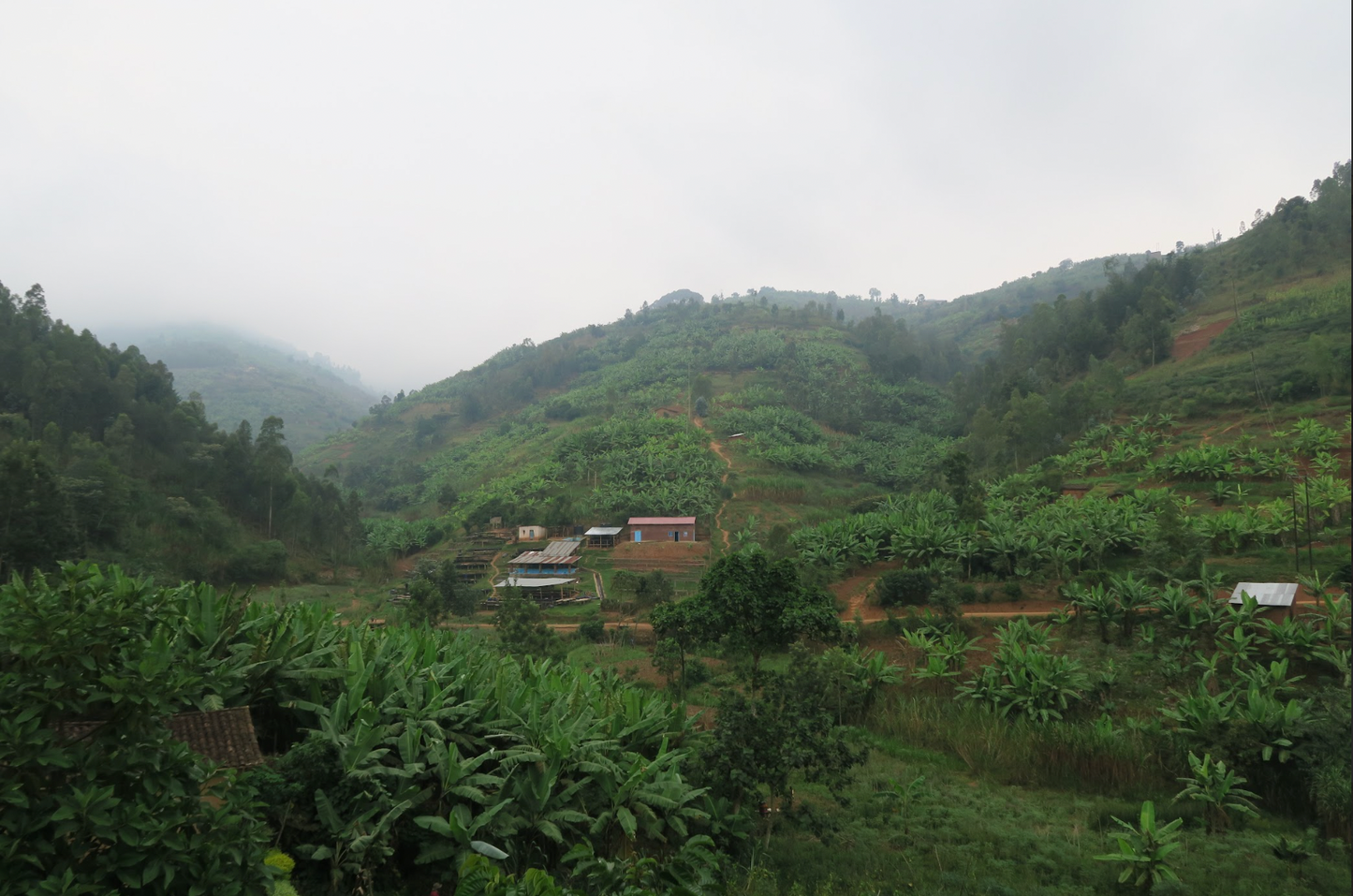
Muzo White Honey
Producers: 650 Smallholder Farmers --> Muzo Station
Origin: Gakenke District, Northern Province, Rwanda
Elevation: 2000 MASL
Variety: Red Bourbon
Process: White Honey, 48 Hour Extended Fermentation
Importer: Sundog Trading / Baho Coffee
Flavor Notes: Sweet Tea, Granny Smith, Florals, Brisk, Brown Sugar
#Anotherone This is our fourth release from the gems of Sundog Trading and Baho Coffee. This mayyyyy be the offering I've been most excited about from the 5 lots we brought in this year. This is a special White Honey lot for Baho and Sundog as it was created and refined with collaboration from one of the raddest specialty minds out there and longtime contributor to our industry, Christopher Feran. Let's dig in!
Real Quick! Do yall know what White Honey process is?! If yes, skip to the next paragraph, if not here's the quick quick: Honey process aka semi-washed aka pulp natural is a mid-point of sorts between the washed and natural processes. With the honey process, the cherries are picked and depulped as they are in the washed process, but then they are dried with the mucilage (sugary, honey-like layer) in tact - whereas in the washed process this is agitated off the seed before drying. As honey processing has become more common, producers have experimented with more and less mucilage in tact and as a way to roughly classify them, we look to colors. So in short, the lighter the color, the least mucilage is left on the seed and the darker the color, the more of the mucilage is left in tact. TLDR - White Honey is as close as you can get to a washed coffee while still having some of that good sugary mucilage left on the seed to dry which gives our cup profile a little more body and sweetness in my experiences! Ok, onward!
As told by Sundog Trading: The Muzo station is nestled in the rolling hills near the heart of Rwanda, about a 2 hour drive North West of the capital city. There are drastically fewer stations in this remote area of the country in comparison to famously populated districts like those immediately surrounding Lake Kivu. Nonetheless, competition remains fierce, as the Gakenke District has garnered the attention of more strictly specialty-focused stations.
Muzo is the smallest in the Baho collection, and it is very near and dear to Emmanuel (founder of Baho Coffee) as the source of some of his most prized coffees. It’s also been a major focus of investment the past few seasons. Baho established a massive seedling distribution program here, gifting millions of Red Bourbon (BM139) seedlings to farmers. In tandem with farms slowly starting to increase their output, Muzo has been expanding their land and adding a substantial amount of drying beds. When we first began working with this station in 2019, it was collecting from around 400 farmers and producing only half of a container of coffee. These numbers have now grown to 650 producers delivering, with the annual production of exportable coffee over 2 full containers - around 700 x 60kg bags to be exact.
With altitudes topping out at 2000+ masl, it’s no surprise why coffees that come through this station are some of the most dynamic that we taste each season. As one of the more intensely mountainous regions of Rwanda, many farmers are located in areas that make the journey to deliver cherry particularly strenuous. To assist people living in these highest altitude and hardest-to-travel places, Baho has established a free collection service for Muzo. Producers are still given full price for cherry, and Baho takes on the extra costs associated with a station leader driving around to collect coffee at people’s homes and/or established collection sites.
For this specific white honey process, we collaborated with our friend and longtime supporter of Baho, Christopher Feran. Christopher designed a protocol that we shared with Emmanuel early in the 2024 harvest season. We then requested to try the process as an experiment with a selection of the highest quality cherries sourced from the highest altitude areas, and we agreed on an exact purchase volume and price. Muzo was a clear choice for this trial, as it’s a location where we could source cherry grown at over 2000 masl from the latter third of the harvest season. We’re incredibly excited that this honey process worked so well and already have plans to ramp up volume next season!
Every processing style begins with a day of intensive sorting at the cherry stage, under complete shade, to ensure only the ripest are chosen and any visible defects are removed. Step two is multiple rounds of floating - filling a large container with cherries and water, discarding the less dense cherries that float to the top of the tank.
After enough volume was accumulated, the cherries were depulped and placed into clean plastic barrels filled with fresh, cold water. The barrels were stored under shade, lids off, where they were left for a total of 48 hours. Every 12 hours, the wet parchment slurry was very gently stirred; and at the 48 hour mark, it was vigorously stirred to remove the majority of the mucilage before being transferred to the drying tables.
The drying protocol begins by moving coffee onto shaded beds for 12 - 72 hours. This is a unique step in Rwanda, called skin drying, that has two distinct benefits. First, it sets the trajectory for the entire drying phase by initially beginning very gently and slowly under complete shade. Secondly, it allows ample time for intensive sorting while the parchment is still wet - this is important because certain defects (seeds bitten by Antestia in particular, thought to cause the potato defect) can be seen much more easily when the parchment is wet. The parchment is finally moved into full sun on raised drying beds, where it’s very frequently turned until drying is complete. Weather conditions are closely monitored throughout the day, and if certain temperature thresholds are exceeded, workers will focus on turning coffee more frequently or cover the beds with mesh netting. When moisture content reaches the target of 11%, the drying phase is considered complete. The parchment is bagged, labelled, and stored in a dry warehouse at Muzo until time for milling. Total drying time for this lot was 30 days.
This coffee drips with detail from seed to cup. This is some of the highest grown and meticulously sorted Red Bourbon in the county and then under went a unique extended fermentation before being prepared as a white honey lot.
In the cup I'm immediately getting Lipton Brisk Iced Tea vibes off the top. The lemon-y sugary sweet black tea quality is accompanied by an awesome granny smith apple like acidity and tartness. As the coffee cools, florals a la rose and chamomile start to creep up in the cup profile. This is a special one. No way around it. Grab a bag of this for the self and for the homie as this unique lot won't be around for long!
Couldn't load pickup availability
Shipping Information
Shipping Information
Shipping Days: We ship orders twice a week, on Tuesdays and Thursdays.
Shipping Method: All orders are shipped via USPS Priority Mail for prompt and reliable delivery.
Processing Time: Orders placed by 12:00 PM on Monday and Wednesday will be processed and shipped the following shipping day. Orders placed after this cutoff will be processed on the next available shipping day.
Tracking: Once your order has been shipped, you will receive a confirmation email with tracking information so you can follow its progress.